


 Posts
Posts


Showing posts with label social life. Show all posts
Showing posts with label social life. Show all posts
Saturday, August 11, 2012

Monday, July 16, 2012
On writing, on reading and The Mayborn
People often ask artists who has influenced their work -- musicians, painters, sculptors, filmmakers, writers. It's a tough question to escape. I've asked it, but not too often, because I've found that many good artists don't seem keen on bringing that kind of consciousness to their work.
I write intuitively, too. I try to edit consciously. And editing often seems to be slightly under the influence of whomever I'm reading at the time.
(Except Gabriel Garcia Marquez, Isabel Allende, and Joan Didion. They are always there.)
This year, Paige has left behind collections from University of Iowa students. Home of Iowa Writers Workshop, there comes from Iowa always something fresh, and often ever-so-slightly unworkable in those pages. I enjoy them. And my friend, RunnerSusan, has loaned me a dozen of her favorite works of fiction that have taken me down unexpected paths.
I took a break from reading the authors scheduled for this weekend's Mayborn conference to pour over essays for a writer's workshop. My essay, Carrion (see the pages on the left), has been accepted to the workshop, so I am reading the work of others who will be sequestered with me and our workshop leader. More new voices and ideas.
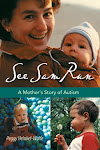
Like a book club, only on steroids, it's the eighth Mayborn writer's conference this weekend. It doesn't seem that long ago that I threw the manuscript for "See Sam Run" into the workshop to see what would happen. There won't be anything on that scale for me this weekend, but it will be for someone, and there is all that other talk of writing and reading and writing that is so inspiring to us all. I can't wait to see what this weekend will bring.
I write intuitively, too. I try to edit consciously. And editing often seems to be slightly under the influence of whomever I'm reading at the time.
(Except Gabriel Garcia Marquez, Isabel Allende, and Joan Didion. They are always there.)
This year, Paige has left behind collections from University of Iowa students. Home of Iowa Writers Workshop, there comes from Iowa always something fresh, and often ever-so-slightly unworkable in those pages. I enjoy them. And my friend, RunnerSusan, has loaned me a dozen of her favorite works of fiction that have taken me down unexpected paths.
I took a break from reading the authors scheduled for this weekend's Mayborn conference to pour over essays for a writer's workshop. My essay, Carrion (see the pages on the left), has been accepted to the workshop, so I am reading the work of others who will be sequestered with me and our workshop leader. More new voices and ideas.
Like a book club, only on steroids, it's the eighth Mayborn writer's conference this weekend. It doesn't seem that long ago that I threw the manuscript for "See Sam Run" into the workshop to see what would happen. There won't be anything on that scale for me this weekend, but it will be for someone, and there is all that other talk of writing and reading and writing that is so inspiring to us all. I can't wait to see what this weekend will bring.
Tuesday, June 12, 2012
Where running meets writing
It used to be that I ran with RunnerSusan.
It was easy. We were neighbors. Not in the Yankee way, (which we both are, by the way), living next door or across the street from each other, but in the Texas way, where we could be like the two trains in a story problem with 4th grade math. If two runners leave the house at the same time, and one heads west on Frenchtown Road and the other heads east, where and what time will they meet?
And then we'd keep running for an hour.
She moved to a new place, with a peach tree and a patio. It would take more than an hour to meet, so now I race alone.
It's ok.
One day soon, we'll figure out how to start the way we started last summer, trail running. Trail running is the best, anyways. If we get going good enough, we might race together this fall, through trails in the woods in East Texas, or up around Lake Ray Roberts.
I'd love to run the Palo Duro Canyon race in October, but a professional conference sneaked onto the calendar that weekend.
Maybe next year.
By the way, fellow Mayborn School of Journalism pals Valerie Gordon Garcia and Sarah Perry joined team-in-training.
We care about blood cancers in the Wolfe house.
A good friend is living with it.
And so is my dad.
Happy Father's Day, Dad!
It was easy. We were neighbors. Not in the Yankee way, (which we both are, by the way), living next door or across the street from each other, but in the Texas way, where we could be like the two trains in a story problem with 4th grade math. If two runners leave the house at the same time, and one heads west on Frenchtown Road and the other heads east, where and what time will they meet?
And then we'd keep running for an hour.
She moved to a new place, with a peach tree and a patio. It would take more than an hour to meet, so now I race alone.
It's ok.
One day soon, we'll figure out how to start the way we started last summer, trail running. Trail running is the best, anyways. If we get going good enough, we might race together this fall, through trails in the woods in East Texas, or up around Lake Ray Roberts.
I'd love to run the Palo Duro Canyon race in October, but a professional conference sneaked onto the calendar that weekend.
Maybe next year.
By the way, fellow Mayborn School of Journalism pals Valerie Gordon Garcia and Sarah Perry joined team-in-training.
We care about blood cancers in the Wolfe house.
A good friend is living with it.
And so is my dad.
Happy Father's Day, Dad!
Tuesday, May 29, 2012
Horse bling

Sam isn't a belt-buckle-wearing kind of guy. When he'd come home from Chisholm Challenge with another trophy buckle, usually from being the best in English equitation, we'd look at it lovingly for a minute. The organizers of Chisholm Challenge order the trophy buckles each year from the silversmith in Placerville, Calif. That was always fun to see, too. I knew the shop since I worked for the El Dorado Arts Council for three years, back when Sam was an infant and toddler.
But then, we'd just put the buckle back in the velveteen box and shove it in the dining room cabinet. (Lots of room in there. We don't have many fancy dishes.) After a few years, I felt bad. He worked hard for those buckles and he didn't get one every year for every event. (Unlike Special Olympics medals, but I digress.)
I figured it was time for a display. I asked Dad, and the next time we were talking on Skype, he showed me what he'd built. I brought it home two weeks ago and showed it to Sam.
He's not really a belt-buckle-arranging kind of guy, either. I pulled them out of the box, marveled at the craftsmanship and then arranged them.
I hope he's a belt-buckle-noticing kind of guy.
Tuesday, April 10, 2012

Saturday, March 24, 2012
Random Thoughts from the Grassland Half
 There are people who can run 37 more miles than you and still get to the finish line before you do. The last mile is longer than the first four. Stay far ahead of the guy whose t-shirt says "Pappa Joe." The LBJ Grasslands are not flat -- as in, climb every mountain; ford every stream. Don't run up a hill unless you can see the top. Trail runners will tell you "good job" even when you're walking. Compressors are just as loud on the prairie as they are next to your house. The Grasslands are also flammable. Don't get between a mamma cow and her calf. Try not to think about all the wild hog tracks you are following. You learned the best survival lessons in kindergarten: carry jelly beans and eat the peanut butter crackers at the aid station.
Wednesday, March 14, 2012
Waiting for the cable guy
Yesterday, I had the pleasure of calling Tom "Smitty" Smith for a story I was working on. He's with the Texas office of Public Citizen and I always learn something when I talk to him.
He wasn't in the office. He was at home, waiting for the cable guy. It had been a long wait, and we laughed about how it's always that way. I shared the little known fact that the actor (Daniel Whitney) created his Larry The Cable Guy by calling into radio shows.
Sam is a huge fan of Larry the Cable Guy, though not from his stand-up or his movies, but as Mater in Cars and Cars 2. During his sophomore year, he wanted to do his final paper for a film history class on Larry the Cable Guy. His humanities professor was reluctant, I could tell. He said his subject had to have made at least three movies. Lucky for Sam, Witless Protection was coming out. I showed him the IMDB web site, and he found some older movies, one of which was at the library, so he was in business.
Sam really went after that paper. He researched the actor's biography and the nature of comedy. His critical thinking grew in the course of researching and writing that paper.
I'd learned long ago that when Sam is motivated about a topic, he will learn as well or better than any other student doing the same work in a more traditional way.
His analysis of the actor and his work almost had me respecting the guy for his talents. And then I remembered all the fart jokes.
Sunday, February 26, 2012
Random thoughts from the Cowtown Half
 Don't try to mix honey and chia seeds in the truck, but if you do, bring a wet rag. Running with thousands of people in the stockyards makes you feel at one with the cattle. Some men wear chaps and they are not cowboys. At the 8-mile mark, you can hear people unload their psychological burdens whether you want to or not. No matter how many hills you train it is impossible to prepare for the Main Street bridge incline, although, in a pinch, singing loud and off-key can help. After crossing the finish line, even though you are milling among thousands, you can still run into the man who is remodeling your bathroom. The wedge-shaped finisher's medal does not appear to be something you should wear on the way home, in case your airbag goes off.
Wednesday, February 15, 2012
Saturday, December 17, 2011
Friday, October 28, 2011
Happy Halloween
My good friends at Texas Parent-to-Parent sent out their fall newsletter with some tips to help kids with disabilities, and particularly those with autism, Aspergers and sensory dysfunction to make the most of Halloween.
I asked Sam tonight if he remembers when it got easier for him to wear Halloween costumes. He stopped eating his Blue Bell Christmas Cookie ice cream long enough to say "high school."
So, long past the trick-or-treating days.
Here's a tip sheet for costumes and activities.
And here's a tip sheet for the rest of us to help make Halloween special for all the kids.
Remember what Lucy Van Pelt said: Never jump into a pile of leaves with a wet sucker.
I asked Sam tonight if he remembers when it got easier for him to wear Halloween costumes. He stopped eating his Blue Bell Christmas Cookie ice cream long enough to say "high school."
So, long past the trick-or-treating days.
Here's a tip sheet for costumes and activities.
And here's a tip sheet for the rest of us to help make Halloween special for all the kids.
Remember what Lucy Van Pelt said: Never jump into a pile of leaves with a wet sucker.
Friday, October 14, 2011
Southern Impolite Meets a Yankee Can of Whoop-Ass
(Note to readers: This is not one of my best moments. I'm exploring events from our lives for the next book, in hopes that there are lessons and wisdom in these experiences. Or, at minimum, a good chuckle. Let's see what happens with this one.)
At the end of Sam's second-grade year, the kids and I went with Mark to Shreveport for a year-end concert with the Shreveport Symphony Orchestra.
It was a great opportunity for the kids to see their dad perform as the tubist in the orchestra. Most concert settings are so formal, even I had hard time behaving.
The Shreveport Symphony had always held their year-end concert in the convention center. They put out round tables and lots of kitschy decorations around the room. Some people decorated their tables, too, and of course the food and wine flowed as the symphony played a pops program.
The acoustics were horrible -- there was a level of background noise in the room that I'm sure made it a real challenge for the guys on the mixing board. But a great time was always had by all.
The kids and I sat in the back with some other symphony friends at our table and at tables around us. Given how young the kids were -- Sam was 8, Michael was 5 and Paige not quite 3 -- I was thrilled how well they behaved. Especially Sam. He didn't get up and run around the tables. He wiggled and fidgeted some in his seat. Sometimes he would slip down and stand up next to his chair, but at his size, he wasn't tall enough to block the view for any one around us.
This was a huge accomplishment for him. We had worked hard during second grade to help Sam learn to stay in his seat and pay attention. He had such trouble with it at the beginning of the year that his teacher had begun to send him out to the hallway with his aide when he couldn't sit still. While I could see her point that he was a distraction for the other kids in the class, the aide noticed that sending him out in the hallway was reinforcing the problem. She got worried. I called Kevin Callahan, a special education professor at the University of North Texas at the time. He came to observe and designed a little intervention that helped Sam teach himself to stay in his seat and pay attention. It was brilliant and it worked.
But Sam's behavior wasn't perfect, and even though his little brother and sister wiggled and fidgeted, too, Sam's wiggles got the attention of one woman a table or two away. She would watch Sam. She would whisper to the people at her table. It was hard not for me to notice I was being judged, too.
I did my best to ignore the Chinese water torture of her judgment. We were making some good memories and I didn't want to give her the power to spoil it.
After the concert ended, people began packing up their tables. Sam, Michael and Paige rushed to the stage to hug their dad and meet the other musicians. I stayed behind to pack up our things. I looked up to see the woman was approaching me.
She began to tell me what she thought was wrong with Sam.
I listened patiently for her to get to her stopping point. I told her that actually I was quite proud of my son because he has autism and his dad was performing and this was about the best he had sat still and paid attention this whole year.
Then she smiled this treacly smile and said, "Well, I am a teacher of the emotionally disturbed and in my experience ..."
I lost it.
I leaned forward and yelled, "Get out of my face."
She looked stunned. But she didn't move.
"Get out of my face!" I yelled again.
She took a step back.
"I said, get out of my face!"
Rule of three, she finally went back to her friends.
I was ashamed of myself for losing my cool. And a little grateful that the room was full of ambient noise, enough that only the woman and her friends knew what had happened between us. Maybe another table, but that was about it. The kids and Mark never heard it.
I walked very deliberately towards the stage. I could feel the woman and her friends watching me. I told Mark what had happened and turned and pointed to the woman. He studied her. She and her friends finished packing up and left.
"Do I need to go over there and do something?" he asked.
"Nah," I said. "I don't think she'll bother another autism parent again in her life."
At the end of Sam's second-grade year, the kids and I went with Mark to Shreveport for a year-end concert with the Shreveport Symphony Orchestra.
It was a great opportunity for the kids to see their dad perform as the tubist in the orchestra. Most concert settings are so formal, even I had hard time behaving.
The Shreveport Symphony had always held their year-end concert in the convention center. They put out round tables and lots of kitschy decorations around the room. Some people decorated their tables, too, and of course the food and wine flowed as the symphony played a pops program.
The acoustics were horrible -- there was a level of background noise in the room that I'm sure made it a real challenge for the guys on the mixing board. But a great time was always had by all.
The kids and I sat in the back with some other symphony friends at our table and at tables around us. Given how young the kids were -- Sam was 8, Michael was 5 and Paige not quite 3 -- I was thrilled how well they behaved. Especially Sam. He didn't get up and run around the tables. He wiggled and fidgeted some in his seat. Sometimes he would slip down and stand up next to his chair, but at his size, he wasn't tall enough to block the view for any one around us.
This was a huge accomplishment for him. We had worked hard during second grade to help Sam learn to stay in his seat and pay attention. He had such trouble with it at the beginning of the year that his teacher had begun to send him out to the hallway with his aide when he couldn't sit still. While I could see her point that he was a distraction for the other kids in the class, the aide noticed that sending him out in the hallway was reinforcing the problem. She got worried. I called Kevin Callahan, a special education professor at the University of North Texas at the time. He came to observe and designed a little intervention that helped Sam teach himself to stay in his seat and pay attention. It was brilliant and it worked.
But Sam's behavior wasn't perfect, and even though his little brother and sister wiggled and fidgeted, too, Sam's wiggles got the attention of one woman a table or two away. She would watch Sam. She would whisper to the people at her table. It was hard not for me to notice I was being judged, too.
I did my best to ignore the Chinese water torture of her judgment. We were making some good memories and I didn't want to give her the power to spoil it.
After the concert ended, people began packing up their tables. Sam, Michael and Paige rushed to the stage to hug their dad and meet the other musicians. I stayed behind to pack up our things. I looked up to see the woman was approaching me.
She began to tell me what she thought was wrong with Sam.
I listened patiently for her to get to her stopping point. I told her that actually I was quite proud of my son because he has autism and his dad was performing and this was about the best he had sat still and paid attention this whole year.
Then she smiled this treacly smile and said, "Well, I am a teacher of the emotionally disturbed and in my experience ..."
I lost it.
I leaned forward and yelled, "Get out of my face."
She looked stunned. But she didn't move.
"Get out of my face!" I yelled again.
She took a step back.
"I said, get out of my face!"
Rule of three, she finally went back to her friends.
I was ashamed of myself for losing my cool. And a little grateful that the room was full of ambient noise, enough that only the woman and her friends knew what had happened between us. Maybe another table, but that was about it. The kids and Mark never heard it.
I walked very deliberately towards the stage. I could feel the woman and her friends watching me. I told Mark what had happened and turned and pointed to the woman. He studied her. She and her friends finished packing up and left.
"Do I need to go over there and do something?" he asked.
"Nah," I said. "I don't think she'll bother another autism parent again in her life."
Saturday, July 16, 2011
See Sam Fly
Sam hopped on a plane and flew to Salt Lake City to stay with my sister and her family.
Within minutes after his arrival, he sent me a text about how beautiful the weather was.
(Yeah, just rub that one in there, buddy.)
This is Sam's second trip to Utah and about his sixth or seventh time to fly on his own. I don't need to accompany him to the gate anymore, nor does anyone need to meet him there like we did when he first flew on his own.
I did not do a single thing to help him pack, not a prompt about the web check-in or anything. When we got to the airport, I asked him, "do you want to hop out at the curb or do you need me to come in?"
He asked me to come in and stay until he was got in the security line.
But he thought about it for a minute. He really did.
Within minutes after his arrival, he sent me a text about how beautiful the weather was.
(Yeah, just rub that one in there, buddy.)
This is Sam's second trip to Utah and about his sixth or seventh time to fly on his own. I don't need to accompany him to the gate anymore, nor does anyone need to meet him there like we did when he first flew on his own.
I did not do a single thing to help him pack, not a prompt about the web check-in or anything. When we got to the airport, I asked him, "do you want to hop out at the curb or do you need me to come in?"
He asked me to come in and stay until he was got in the security line.
But he thought about it for a minute. He really did.
Sunday, May 15, 2011
JoC's Strawberry Punch, freely interpreted
For Sam's graduation party, I put out a devil's food cake (from Rosso and Lukins' New Basics Cookbook), chili-lime peanuts (from epicurious), butter mints (from Albertsons) and a double-batch of strawberry punch, based on the recipe from Joy of Cooking.
A few people asked for the recipe. The original is good just the way it is and I've made it that way many times, but Sam doesn't like carbonated beverages, so I had to fake it a little bit.
The Original
Boil for 5 minutes:
4 cups water
4 cups sugar
Cool the syrup. Combine:
2 quarts hulled strawberries
1 cup slice canned or fresh pineapple
1 cup mixed fruit juice -- pineapple, apricot, raspberry, etc.
Juice of 5 large oranges
Juice of 5 large lemons
(3 sliced bananas)
Add the syrup, or as much of it as is palatable. Chill these ingredients. Immediately before serving, add:
2 quarts carbonated water
3 cups or more of crushed ice.
The basic mix is concentrated, to offset the dilution that happens with the icing. Water can be added, as desired.
JoC Strawberry Punch, Sam Style
Boil for 5 minutes
4 cups water
4 cups sugar
As the syrup is cooling, hull and slice the strawberries into the syrup (helps the infusion)
When ready to mix, I added one bottle of TexSun Orange-Pineapple Juice (a favorite from his childhood) and 1 1/2 cups of lemon juice, and a small can of pineapple slices, drained.
Chill.
To serve, I added three trays of ice cubes.
A few people asked for the recipe. The original is good just the way it is and I've made it that way many times, but Sam doesn't like carbonated beverages, so I had to fake it a little bit.
The Original
Boil for 5 minutes:
4 cups water
4 cups sugar
Cool the syrup. Combine:
2 quarts hulled strawberries
1 cup slice canned or fresh pineapple
1 cup mixed fruit juice -- pineapple, apricot, raspberry, etc.
Juice of 5 large oranges
Juice of 5 large lemons
(3 sliced bananas)
Add the syrup, or as much of it as is palatable. Chill these ingredients. Immediately before serving, add:
2 quarts carbonated water
3 cups or more of crushed ice.
The basic mix is concentrated, to offset the dilution that happens with the icing. Water can be added, as desired.
JoC Strawberry Punch, Sam Style
Boil for 5 minutes
4 cups water
4 cups sugar
As the syrup is cooling, hull and slice the strawberries into the syrup (helps the infusion)
When ready to mix, I added one bottle of TexSun Orange-Pineapple Juice (a favorite from his childhood) and 1 1/2 cups of lemon juice, and a small can of pineapple slices, drained.
Chill.
To serve, I added three trays of ice cubes.
Tuesday, November 16, 2010
Emotional IQ
Sam and I had the most amazing exchange this morning, one that belongs in some kind of magazine about how mature people should deal with powerful emotions.
First, you've got to set a stage for two people completely, utterly and totally misunderstanding each other. We'd both just gotten up -- and neither of us are morning people. Plus, I had had only a sip or two of the morning joe, so that's two strikes against me.
Sam was opening a vitamin jar to get a tablet out and suddenly it just flew from his hand and rolled on the floor. I didn't see any of this. I just heard him yell "OH!" so loud adrenaline rushed to my nerve endings, so full and fast that it hurt my fingertips.
I thought my reaction was amazingly calm, considering. I turned around, puzzled that nothing seemed to be wrong, and said, "Don't yell so loud in the house."
That upset Sam terribly. He left the room.
A few minutes later, he told me that my comment made him feel like a little kid again and brought back bad childhood memories. That brought tears to my eyes. I tried to apologize for the comment, but Sam said we shouldn't talk about it anymore, since it was about to make me cry.
I told him no, please, I welcomed the chance to say I'm sorry not only for hurting his feelings today, but also for any bad childhood memories and we could talk a little more if he wanted.
Sam said he remembered misbehaving, and it was in the past and it could stay in the past. I told him I thought that was very mature.
Then I said, you know, I didn't know why you yelled so loud. I thought I needed to call 911 or something. He explained what happened, I told him I understood now why he yelled, and then he said he understood why I felt like I needed to say something about the yelling.
What Sam brought to the conversation that was so amazing was believing me when I said I loved him and never wanted to hurt him. That was part of my apology. I told him that it's important to me to stick up for myself, and I've noticed that when someone sticks up for themselves, it can be hard to do without hurting the other person sometimes.
The whole conversation took all of 10 minutes and brought me such a sense of wonderment. I'm still trying to figure out where this supposed lack of social understanding comes from in people with autism. Sam is so clear-eyed and clear-headed. His father and I could not have had such a conversation early in our marriage. Even later in our marriage, it would take two hours to wade through all the emotional thicket to get to the same place.
I think it's the opposite. I think the rest of us lack emotional intelligence. We play stupid mental games with each other, and we don't trust each other.
When Sam doesn't trust someone, he just doesn't deal with them at all. How smart is that?
Any girl would be lucky to have him.
First, you've got to set a stage for two people completely, utterly and totally misunderstanding each other. We'd both just gotten up -- and neither of us are morning people. Plus, I had had only a sip or two of the morning joe, so that's two strikes against me.
Sam was opening a vitamin jar to get a tablet out and suddenly it just flew from his hand and rolled on the floor. I didn't see any of this. I just heard him yell "OH!" so loud adrenaline rushed to my nerve endings, so full and fast that it hurt my fingertips.
I thought my reaction was amazingly calm, considering. I turned around, puzzled that nothing seemed to be wrong, and said, "Don't yell so loud in the house."
That upset Sam terribly. He left the room.
A few minutes later, he told me that my comment made him feel like a little kid again and brought back bad childhood memories. That brought tears to my eyes. I tried to apologize for the comment, but Sam said we shouldn't talk about it anymore, since it was about to make me cry.
I told him no, please, I welcomed the chance to say I'm sorry not only for hurting his feelings today, but also for any bad childhood memories and we could talk a little more if he wanted.
Sam said he remembered misbehaving, and it was in the past and it could stay in the past. I told him I thought that was very mature.
Then I said, you know, I didn't know why you yelled so loud. I thought I needed to call 911 or something. He explained what happened, I told him I understood now why he yelled, and then he said he understood why I felt like I needed to say something about the yelling.
What Sam brought to the conversation that was so amazing was believing me when I said I loved him and never wanted to hurt him. That was part of my apology. I told him that it's important to me to stick up for myself, and I've noticed that when someone sticks up for themselves, it can be hard to do without hurting the other person sometimes.
The whole conversation took all of 10 minutes and brought me such a sense of wonderment. I'm still trying to figure out where this supposed lack of social understanding comes from in people with autism. Sam is so clear-eyed and clear-headed. His father and I could not have had such a conversation early in our marriage. Even later in our marriage, it would take two hours to wade through all the emotional thicket to get to the same place.
I think it's the opposite. I think the rest of us lack emotional intelligence. We play stupid mental games with each other, and we don't trust each other.
When Sam doesn't trust someone, he just doesn't deal with them at all. How smart is that?
Any girl would be lucky to have him.
Tuesday, October 19, 2010
The "Empathy Deficit" fallacy
At the risk of falling to the theory of self-reference, I've always been skeptical that people with autism lack empathy. I've just never seen that deficit in Sam, nor in any other people with autism or Asperger's that I've met.
I got to thinking about that after reading this piece in the Boston Globe, which goes to some length to describe how our kids apparently are lacking it.
Empathy, by definition, means some kind of emotional response to the pain or suffering of another. Babies and children don't always demonstrate their empathy the way adults do -- that's part of our socialization -- but they feel it just the same.
My guess is that some of us not on the spectrum look for empathy to be demonstrated in a tangible way. Then when we don't see it, we say "a-ha, that person with autism lacks empathy."
The Boston Globe article even spelled that out with a list of tasks an empathetic person is more likely to do. Most of them, I could imagine Sam doing, but not always for purely empathetic reasons.
For example, "return incorrect change to a cashier" could also be following the rules and keeping things correct.
The next two, "let someone else ahead of them in line" and "carry a stranger’s belongings" requires a person to break a social rule about getting into another person's personal space. Sam does this all the time at Albertsons because he is a courtesy clerk and it's expected of him. I've seen it generalize.
"Give money to a homeless person," "volunteer," "donate to a charity," check, check and check. In fact, we talk about picking our charitable causes with purpose.
"Look after a friend’s pet or plant," been there, done that.
"Live on a vegetarian die." Sorry, we're in Texas and he's meat-eater. But butchering day comes with much reverence. We all know where our food comes from.
Sometimes I think we overreact to perceived deficits.
Sam doesn't hug me. I don't ask for it. Here's why. The few times we do hug, there is so much human connection, I can almost feel the nuclear fission begin. Better not to disturb the universe like that.
I got to thinking about that after reading this piece in the Boston Globe, which goes to some length to describe how our kids apparently are lacking it.
Empathy, by definition, means some kind of emotional response to the pain or suffering of another. Babies and children don't always demonstrate their empathy the way adults do -- that's part of our socialization -- but they feel it just the same.
My guess is that some of us not on the spectrum look for empathy to be demonstrated in a tangible way. Then when we don't see it, we say "a-ha, that person with autism lacks empathy."
The Boston Globe article even spelled that out with a list of tasks an empathetic person is more likely to do. Most of them, I could imagine Sam doing, but not always for purely empathetic reasons.
For example, "return incorrect change to a cashier" could also be following the rules and keeping things correct.
The next two, "let someone else ahead of them in line" and "carry a stranger’s belongings" requires a person to break a social rule about getting into another person's personal space. Sam does this all the time at Albertsons because he is a courtesy clerk and it's expected of him. I've seen it generalize.
"Give money to a homeless person," "volunteer," "donate to a charity," check, check and check. In fact, we talk about picking our charitable causes with purpose.
"Look after a friend’s pet or plant," been there, done that.
"Live on a vegetarian die." Sorry, we're in Texas and he's meat-eater. But butchering day comes with much reverence. We all know where our food comes from.
Sometimes I think we overreact to perceived deficits.
Sam doesn't hug me. I don't ask for it. Here's why. The few times we do hug, there is so much human connection, I can almost feel the nuclear fission begin. Better not to disturb the universe like that.
Saturday, August 21, 2010
Billy Bob's
Last year, Michael discovered that he could get into Billy Bob's, Fort Worth's famous honky tonk, on Thursday nights for free.
He and Sam went together this Thursday, sort of an end-of-summer celebration. Both start classes this week. They were lucky this time, Michael reports, because the cover band kept playing. At one point, they played a family favorite, Stevie Ray Vaughan's Texas Flood.
Sam reports that he had fun and would like to go again soon. "People always have fun at Billy Bob's," he said. It took a while to figure out what was going on, he said. He danced with one girl.
Michael danced with the same girl.
He and Sam went together this Thursday, sort of an end-of-summer celebration. Both start classes this week. They were lucky this time, Michael reports, because the cover band kept playing. At one point, they played a family favorite, Stevie Ray Vaughan's Texas Flood.
Sam reports that he had fun and would like to go again soon. "People always have fun at Billy Bob's," he said. It took a while to figure out what was going on, he said. He danced with one girl.
Michael danced with the same girl.
Tuesday, June 29, 2010
Considering neoteny
(First published 1/24/09)
Sam's social skills have come a long, long way as a young adult. We’ve always known how bright he was. He’s matured into someone who understands the “rules” of adult life and the working world, and often sees emotions with great clarity.
Some slices of life skills we call “social skills” remain stilted. I’ve never been able to quite put my finger on it. After my parents’ 50th anniversary party – epic family gathering that it was – my mom did: “You feel about him like you would a dog.”
It’s a good thing we understand each other, because there could be a terrible subtext with that description.
I happened to be finishing up Gordon Grice’s “The Red Hourglass,” at the same time Mom and I had that conversation. In his book, Grice explores at length this concept of neoteny – the preservation of juvenile characteristics – and how the human and canine relationship could evolve because of that quality. Every domesticated animal has some degree of juvenile characteristics preserved in adulthood … it’s what makes them domesticated.
I felt pretty clueless after I googled “neoteny and autism” and found others in the blogosphere that are considering the concepts directly (neoteny.org). Of course, Temple Grandin has explored human-animal relationships and their implications for all of us.
I do, however, want to offer this to the broader conversation. If neoteny will forever characterize some of his social skill set, and that of other people with autism, that puts a responsibility on the rest of us.
Plenty of folks don’t have a clue how to interact with domesticated animals responsibly.
Yet I’m encouraged, because it's not an unfamiliar responsibility. I don’t have to meet him more than halfway, and no one else has to either.
Monday, April 26, 2010
Do you want to be my friend?
Those who've read See Sam Run may remember the passage that alludes to Eric Carle's book, "Do You Want to Be My Friend?" Classic children's books were a big part of fostering Sam's language development as a preschooler. That little mouse was persistent, and Sam liked the repetitive language.
Until he became a teenager and adult, however, it was never very clear to me what friendships meant to Sam. They seemed to matter, but the attachments weren't quite like the attachments his brother and sister developed with their friends. Sam was fortunate in that the elementary school counselor fostered friendships that ended up carrying Sam through much of his middle and high school years. I saw, over time, that friendships have always been important to Sam. He adores his friends.
On his Facebook page, I've seen many of the same names from those early circles, plus a lot of new names. He enjoys being on Facebook and feeling connected to people.
But in daily life, the social activities -- movies, bowling, games -- have really dropped off since high school. Many of his high school chums are graduating college and getting on with adult things -- getting jobs, apartments, moving away. I know that is as it should be.
Since Sam is a student at a community college and not a traditional, four-year school, his opportunities for a rich social life are limited. He takes advantage of many that TRIO offers, but that's about it.
Adult life brings new circles of people, and new possibilities of friendships. He has a devoted circle of friends at Riding Unlimited, and a small circle of friends from our community. A co-worker invited him to come along to the Denton Arts & Jazz Festival, an invitation Sam had to turn down because of a school conflict. Sometimes they go to lunch together.
Humans are not lone creatures like hawks, or eagles, or foxes, or polar bears. We're more like goats, or sheep, or horses -- we're herd animals. We need connections to survive, and to thrive.
As adults, making connections -- well, we're not very imaginative about it. We befriend people like us. After you get married, for example, you make friends with other couples. After you have a baby, all your new friends are other couples with babies. Friendships with people who aren't exactly like us take a little more thought and consideration.
I know there are support groups that could help Sam and others like him make friends, expanding their social life. We've been to a few. But, they are so far removed from his daily life, they might as well be in Katmandu. In my dream world, everyone meets someone like Sam at some point in their life and decides this person is someone to include in their circle of friends.
In the final analysis, it only requires a little imagination, it's not difficult at all to be Sam's friend.
Wednesday, April 21, 2010
Companionship
A child enters your home and makes so much noise you can hardly stand it–then departs, leaving the house so quiet you think you’ll go mad. - Dr. J.A. Holmes
Call it "empty nest," or as one girlfriend wrote recently, "going out of the parenting business," most parents look to the day their child moves out with a mix of excitement and dread.
Make no mistake about it, Mark and I all but counted the days we thought/hoped/prayed we'd have our three children launched and we'd have the house back to ourselves.
Mark was killed in a traffic accident two-and-half years ago -- so much for that plan.
For a long time after his death, I kept my focus on prepping that launch pad for Sam. Mark and I had learned that it's often traumatic for adults with disabilities to get to age 40 or 50, having lived with their parents all that time, only to confront their deaths. Not only must those adults with disabilities cope with the loss, they also must learn new life skills in middle age. It's tough stuff, or so we'd always been told.
About six months ago, though, I began to reflect on exactly what we were still shooting for. Sam moves into an apartment by himself, and I live in this house by myself, and we're both alone for the next 20 years.
All so that he wouldn't be hit with a double-whammy when it's my time to go.
I asked the smartest person I knew whether I was being selfish in re-thinking this, or was my question a fair one -- what do Sam and I really get by trading out 20 years of companionship?
Not much, she agreed, as long as I'm mindful that he still needs those skills.
It's a funny place to be. Sam is taking college classes and working part-time. He manages his own finances. He drives. He helps out a lot around the house and farm. I do wish he cooked more, but we'll get there. Although far less than what his brother has as a freshman at TCU, Sam has his own social life. (I will blog about this topic soon.)
I've been trying to ease us towards a "roommate" way of getting along, at my wise friend's encouragement. We have a good life where we are right now.
As far as Sam's launch pad, it's still there if, for example, he got his dream job (computers at the National Weather Service) and got serious about that apartment he thinks about from time to time (mostly that he'll have cable TV and high-speed internet, unlike now).
I haven't lost track of the support he'd need to get out the door, if that's his heart's desire. It's not much different, really, than what his brother and sister would need, just a little more of it.
Subscribe to:
Posts (Atom)
